In what was initially projected to be a banner 2026 for Wall Street, investors are now just hoping to avoid a global recession triggered by a historic run-up in energy prices. The first quarter of 2026 was a period of significant transition and volatility for the U.S. stock market. After a strong start in January, the market faced major headwinds in March due to escalating geopolitical tensions in the Middle East, leading to the worst quarterly performance for stocks in four years. Oil prices have been dictating the U.S. stock market’s sharp swings since the war began, with Brent shooting from roughly $70 per barrel to as high as $119 at times. The worry is that the war may last a long time and keep oil and natural gas from the Persian Gulf out of global markets, which could create a brutal catalyst for inflation.
Stocks traded significantly higher on the last trading day of the quarter on hopes for an off-ramp to the conflict in Iran. The markets were supported by reports that President Trump stated he is willing to end U.S. military operations in Iran, even if the Strait of Hormuz remains closed. While optimism around a potential off-ramp to the conflict was providing support for equity markets, oil prices are still significantly higher than at the start of the quarter, reflecting continued uncertainty surrounding the timing and path to reopening the Strait of Hormuz.
The Federal Reserve left the federal funds rate steady at the 3.5%–3.75% target range for a 2nd consecutive meeting in March 2026, in line with expectations. Policymakers noted that economic activity has been expanding at a solid pace, job gains have remained low while inflation remains somewhat elevated. The implications of the war with Iran are uncertain. Against this backdrop, policymakers still expect one reduction in the fed funds rate this year and another in 2027. The U.S. 10 Year treasury yield was volatile during the quarter, having started the year at 4.16%, hitting the low of 3.96% at the end of February, with the high of 4.44% reached on March 27th, falling to 4.32% at the end of the quarter. Elevated oil prices are fueling both inflation concerns and recessionary fears, thereby clouding the outlook for monetary policy trajectories going forward, adding to the volatility.
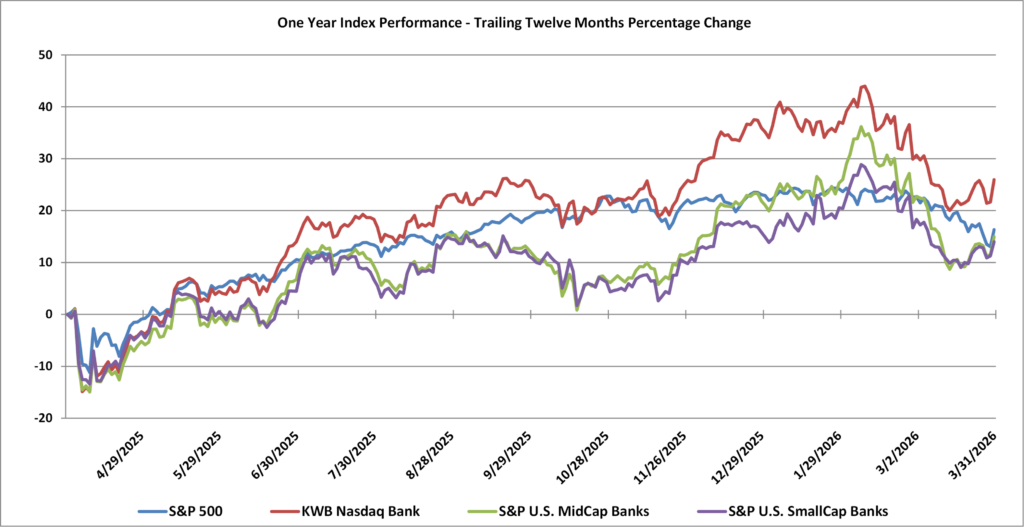
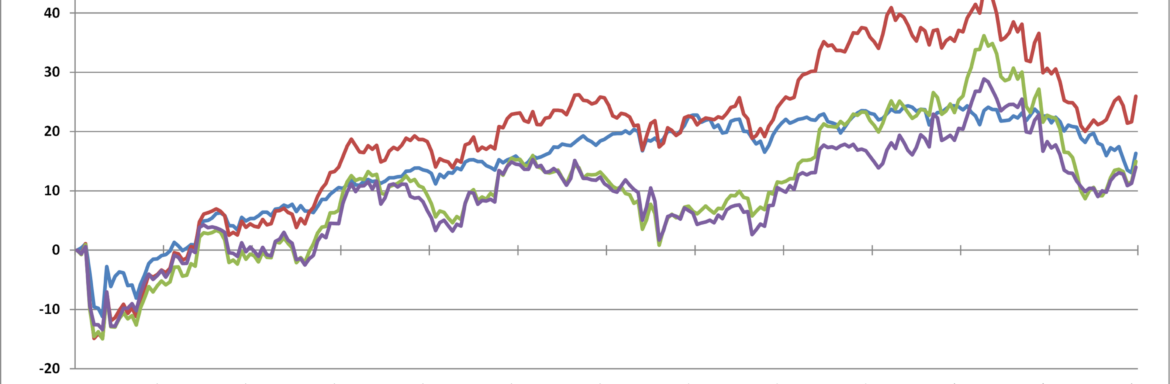
Bank stocks, much like the rest of the market were volatile at times, moved lower for most of the first quarter but rallied late in March, generally matching the movements for the broader market in the first quarter. Bank stocks ended in negative territory during the first quarter, although moving higher during the last week of the quarter. The KBW Nasdaq Bank Index posted a 6.0% decline during the first quarter of 2026 (up by 3.5% during the last day of the quarter) compared with a rise of 7.7% in the fourth quarter of 2025. This index was up by 88.1% over the past three-year period. By comparison, smaller banks posted slightly higher returns during the first quarter of 2026, with the S&P U.S. SmallCap Bank index increasing by 0.10% in the quarter (up by 2.4% during the last trading day of the quarter) with the index being up by 14.0% during the past year while posting a three-year rise of 46.0%. The S&P U.S. MidCap Bank index decreased by 4.1% during the first quarter of 2026 (up by about 4% in last week of March) compared to the increase of 7.5% during the fourth quarter of 2025 leaving it up by 15.0% over the past year, and up by 52.2% over the past three years. By comparison, the S&P 500 was down by 4.6% during the first quarter of 2026 leaving it up by 16.3% during the past year. The S&P 500 was up by approximately 58.9% during the past three-year period compared to the 88.1% increase for the KBW Nasdaq Bank Index and the 76.7% increase in the technology heavy Nasdaq. The Nasdaq decreased by 7.1% during the first quarter of 2026 and was up by 24.8% over the past year.